Ralph Bunche House
115-24 Grosvenor Road | Kew Gardens | built 1927
Open on the map5 entries

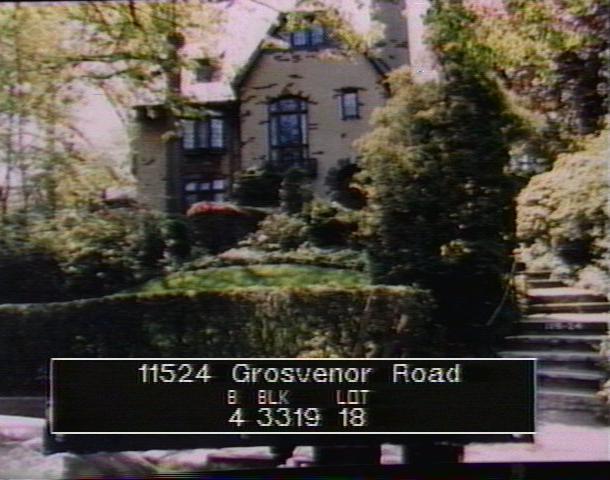
The city photographed every building for its tax records around 1940 and again in the 1980s. NYC Municipal Archives.
Written with AI from the source each entry cites, then fact-checked.
- 1927
Brooklyn architects Koch & Wagner design a neo-Tudor house on Grosvenor Road
The Kew Gardens Corporation sold this lot to Elena Goodale in 1920, and Louis Frisse, who bought it in 1926, had the house built the next year. He hired Arthur R. Koch and Charles C. Wagner, Brooklyn partners since 1910 whose work leaned toward commercial and industrial buildings, including many banks. A detached suburban home was an unusual job for the firm, which designed several branches for the People's National Bank.
“…a free-standing suburban house was a rather unusual type for this firm…”
- 1952
Ralph and Ruth Bunche buy the house with his Nobel Peace Prize money
From 1947 the Bunche family had lived in Parkway Village, a Queens complex built for United Nations workers, and found its apartment crowded. The Nobel Prize award let them afford more room, and in 1952 Ralph and Ruth Bunche bought this neo-Tudor house. Ruth found it while Ralph was laid up with phlebitis. The seller, an admirer of Bunche, cut the price and offered to sell the family anything inside the house.
“Mrs. Bunche had found the house while Ralph was incapacitated by phlebitis. ... The owner of the house was an admirer of Mr. Bunche and lowered the price…”
- 1954
Ralph Bunche, living here, becomes Under Secretary-General of the United Nations
Two years after buying this Kew Gardens house, Bunche took the post of UN Under Secretary-General, which he held until he died in 1971; no American had ever ranked higher in the organization. In those years he built up the UN's peacekeeping and truce-observation work and helped set up both the UN Development Program and the International Atomic Energy Agency.
- 1971
Ralph Bunche dies, and his widow stays on in the Kew Gardens house until 1988
The Grosvenor Road house was the last home of Ralph Bunche, the diplomat who helped found the United Nations and in 1950 became the first African American to receive the Nobel Peace Prize. He lived here until his death in 1971. His wife, with whom he had raised three children, went on living in the house until she died in 1988.
“He lived in the house until his death in 1971, and his wife lived there until she died in 1988.”
Source: Wikipedia
- 2005
Neighbors oppose landmarking the Bunche House because they want all of Kew Gardens protected
At the Landmarks Preservation Commission's hearing, five speakers backed designation, among them Dr. Benjamin Rivlin of the Ralph Bunche Institute and a representative of the city's commission to the United Nations. Three members of the Kew Gardens Civic Association spoke against it, arguing for a historic district covering the whole neighborhood rather than one house. The owner called himself ambivalent, since the house was already a National Historic Landmark.
Further reading
- Ralph Johnson Bunche HouseWikipedia
Nearby
- Church of the Resurrection85-09 118th Street | 4 entries
- Kitty Genovese Residence82-70 Austin Street | 3 entries
- RKO Keith's Theater117-09 Hillside Avenue | 3 entries
- Richmond Hill Republican Club86-15 Lefferts Boulevard | 4 entries
- St. Luke's Episcopal Church85 Greenway South | 3 entries
- Queens Borough Hall120-55 Queens Boulevard | 4 entries