James F. D. Lanier Mansion
16 West 10th Street | Greenwich Village | built 1855
Open on the map4 entries

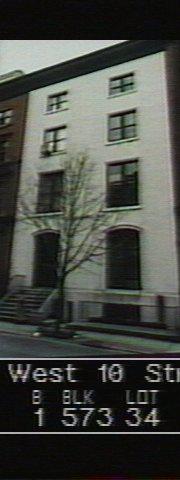
The city photographed every building for its tax records around 1940 and again in the 1980s. NYC Municipal Archives.
Written with AI from the source each entry cites, then fact-checked.
- 1855
James F. D. Lanier buys the newly built mansion
Speculative developers Clinton Gilbert and Henry L. Pierson finish a pair of mansions in 1855, and the 36-foot-wide one at No. 16 is more than ten feet wider than most houses on the block. Its facade mixes Greek Revival, Italianate, and early Renaissance Revival touches. Banker James F. D. Lanier, co-founder of Winslow, Lanier & Co., buys it quickly. During the Civil War he lends Indiana $1 million, and he lives in the house until he dies there in 1881.
Source: Daytonian in Manhattan
- 1904
Lawyer John George Milburn buys the mansion
On January 22, 1904, The New York Times reports that Buffalo lawyer John G. Milburn has bought the house from Charles Lanier. Milburn, president of the 1901 Pan-American Exposition, represents clients such as Standard Oil. Architect William Welles Bosworth files plans for a $1,500 remodeling that February, and the Milburns sell the house for $75,000 in November 1920.
Source: Daytonian in Manhattan
- 1921
Artists convert the mansion into studio apartments
Artists Thomas and Margaret Bevans buy the mansion in November 1920 and remodel the interior into studio apartments. Portrait artist Leo Mielziner and his wife, Ella, move into one on October 1, 1921. Their son Jo Mielziner later wins five Tony Awards for his stage designs.
Source: Daytonian in Manhattan
- 1940
A renovation strips the facade and adds a stucco coating
A 1940 renovation turns the mansion into apartments, two per floor, removes the original 1855 exterior details, and covers the facade in stucco. Little beyond the building's width remains of its first appearance, though much of the interior detail survives. Around 1975 an institute for psychoanalytic studies takes over the basement and first floors as a professional school.
Source: Daytonian in Manhattan
Further reading
- The Sadly Altered 1855 James F. D. Lanier Mansion - 16 West 10th StreetDaytonian in Manhattan
- Then & Now photos: 16 West 10th StreetVillage Preservation: Greenwich Village Then & Now
Nearby
- House of Death14 West 10th Street | 3 entries
- Emma Lazarus House18 West 10th Street | 4 entries
- Clinton Gilbert House12 1/2 West 10th Street | 3 entries
- Price House17 West 9th Street | 4 entries
- Erastus C. Benedict House10 West 10th Street | 4 entries
- Elisha J. Jenkins House13 West 9th Street | 3 entries