Fort Hamilton Casemate Fort
207 Sheridan Loop | also 207 Sterling Drive, 230 Sheridan Loop, 207 Ft Hamilton | Fort Hamilton | built 1931
Open on the map7 entries

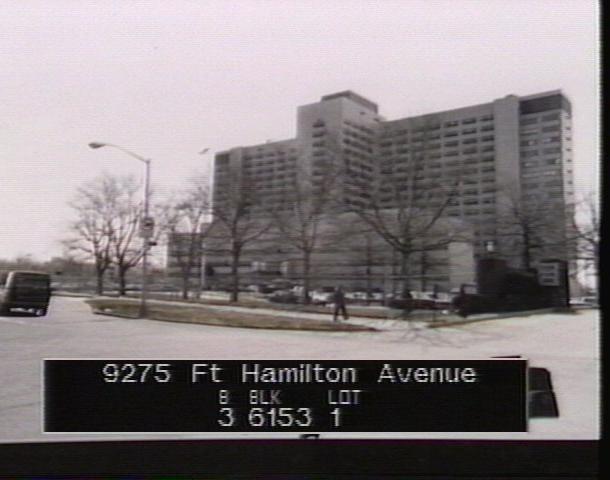
The city photographed every building for its tax records around 1940 and again in the 1980s. NYC Municipal Archives.
Written with AI from the source each entry cites, then fact-checked.
- 1825
Ground is broken for a granite fort on the Narrows named for Alexander Hamilton
Construction of the new fort began on April 26, 1825, on the spot where Fort Lewis had stood since 1814. The cornerstone followed on June 11, 1825. Lieutenant Joseph K. F. Mansfield, an assistant to Superintending Engineer Captain George Blaney, was put in charge of the work. The fort took the name Fort Hamilton in honor of Alexander Hamilton.
“…ground was broken on April 26, 1825... The cornerstone was laid on June 11, 1825.”
- 1831
Battery F of the Fourth Artillery moves into the finished Fort Hamilton
Work on the fort was completed in 1831 under Major De Russy, who had been named Superintending Engineer in 1817. The first troops to occupy it arrived that November: Battery F of the Fourth Artillery, transferred from Fort Columbus on Governors Island. The fort was one of the works of the Totten System of seacoast defenses guarding New York harbor.
- 1831
A gray granite casemate fort sits inside a dry moat beside the Narrows
The fort is built of gray granite blocks laid in random ashlar, with a ground plan shaped like an elongated C. Its outer wall is pierced by gun slits and arched openings for guns, with red brick sills and arches. It stands within a dry moat bounded by two retaining walls, with a V-shaped projection called a caponniere at the eastern end that gave protection against attack from the land side.
“Built of gray granite blocks, laid up in random ashlar, the fort has a trace, or ground plan, in the form of an elongated C.”
- 1884
Soldiers sleep in the casemates, and one holds a library and reading room
An official report of 1884 recorded how the fort was being used by then. Enlisted men were living in quarters set up inside the casemates, and one of the casemates had been given over to a library and reading room. The Landmarks Preservation Commission notes that although the fort's armaments were upgraded from time to time, no shot was ever fired from it in battle.
“…a report of 1884 it was recorded that enlisted men occupied quarters in the casemates of the fort and that a library and reading room was provided…”
- 1938
The old fort is altered to become the Fort Hamilton Officers' Club
The fort was reworked in 1937-38 for use as an officers' club. A portion of the original wall was altered and staircases were added to make an entrance, and red brick walls rose above the original wall. The vaulted rooms of the original casemates can still be seen on the ground floor, along with a staircase with a wrought-iron railing and exposed brickwork.
- 1963
Verrazano-Narrows Bridge construction takes land and several casemates from the fort
Fort Hamilton lost part of its grounds to an anchorage and bridge approaches during construction of the Verrazano-Narrows Bridge, which ran from 1959 to 1963. Several casemates at the northern end of the old fort were removed at that time. The granite seaward wall had earlier been taken down after the Spanish-American War.
“When the Verrazano-Narrows Bridge was under construction between 1959 and 1963, Fort Hamilton had to give up some of its land... Several of the casemates were removed…”
- 1977
The Landmarks Preservation Commission designates the Casemate Fort as a landmark
After a public hearing on January 11, 1977, at which five witnesses, including Fort Hamilton's facility manager, spoke in favor and none against, the Commission designated the Fort Hamilton Officers' Club (Casemate Fort) a city landmark. The Department of the Army had expressed its approval. The Commission called the fort an impressive example of military architecture and a reminder of the nation's early military history.
Nearby
- Harbor Defense Museum9275 Ft Hamilton Parkway | 3 entries
- Fontbonne Hall Academy9915REAR Shore Road | 3 entries
- Poly Prep Country Day School9216 7th Avenue | 4 entries
- Bennet-Farrell-Feldmann House119 95th Street | 10 entries
- Saitta House1135 84th Street | 5 entries