Edison Illuminating Company Station
30 Horatio Street | West Village | built 1910
Open on the map5 entries

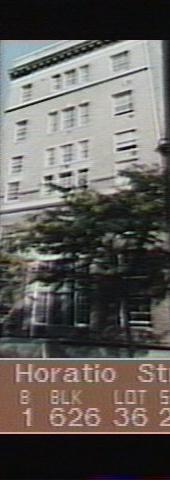
The city photographed every building for its tax records around 1940 and again in the 1980s. NYC Municipal Archives.
Written with AI from the source each entry cites, then fact-checked.
- 1898
A four-story double tenement on the site sells for $16,000, and Edison plans a station there
Before the power station, 30-32 Horatio Street held a four-story double tenement. The Real Estate Record & Builders' Guide reported on January 15, 1898 that it had sold for $16,000. The next year the Edison Electric Illuminating Company announced a fireproof branch station for the address. This was an earlier building on the site.
Source: Daytonian in Manhattan
- 1900
The Edison company's in-house architect completes a substation with soaring interiors and Colonial Revival lintels
The Edison Electric Illuminating Company announced in 1899 that it would build four fireproof branch stations, one of them here at a cost of $23,500. The station opened in 1900, designed by the company's in-house architect: technically three stories but with ceilings tall enough for roughly five, a rusticated stone base, wide carriage-bay-style entrances and splayed lintels inspired by the Colonial Revival. A 1903 company book listed five rotary converters and two batteries, serving the riverfront shipping district and the southern edge of the department-store area.
Source: Daytonian in Manhattan
- 1906
A foreman accused of taking $5 to keep a laborer's job sees the case dismissed after the complainants vanish
While the Horatio Street station was being renovated in 1906, laborer Enrico Ciucci and twenty or more other Italian workers went to Tombs Police Court to accuse foreman Frank de Benedetto of taking $5 to hold his job. On June 17 Justice McKean dismissed the case. The Sun reported that almost all the complainants had disappeared and could not be reached with subpoenas.
Source: Daytonian in Manhattan
- 1936
A neighbor sues Con Edison for $40,000, calling the substation a public nuisance
In November 1936 the owner of the tenement at 26-28 Horatio Street sued Consolidated Edison for $40,000. He said the dynamos in the substation next door made constant noise and that their vibration had damaged the brickwork of his building. A company representative replied that the station had been there for years and that stopping it would cost the public far more than any harm to his property.
Source: Daytonian in Manhattan
- 1967
Con Edison's substation is converted into sixteen apartments with a neo-Colonial doorway
On December 11, 1966 The New York Times reported that two Con Edison stations that had supplied Greenwich Village for more than half a century were becoming apartments, with 30 Horatio Street to hold 16 flats. The conversion, finished in 1967, removed the stoops and original entrances, added an off-set neo-Colonial doorway with faux gas lanterns, and replaced the windows with multi-paned sashes.
Source: Daytonian in Manhattan
Further reading
- The Renovated Edison Illuminating Co. Station - 30-32 Horatio StreetDaytonian in Manhattan
- Then & Now photos: 30-32 Horatio StreetVillage Preservation: Greenwich Village Then & Now
Nearby
- 51 8th Avenue1 entry
- 49A 8th Avenue1 entry
- Former Edison substation (30 Horatio Street)39 Jane Street | 3 entries
- 45 8th Avenue2 entries
- Tavern on Jane31 8th Avenue | 2 entries
- 33 8th Avenue1 entry