Phipps Garden Apartments
50-01 39th Avenue | Sunnyside | built 1931
Open on the map6 entries

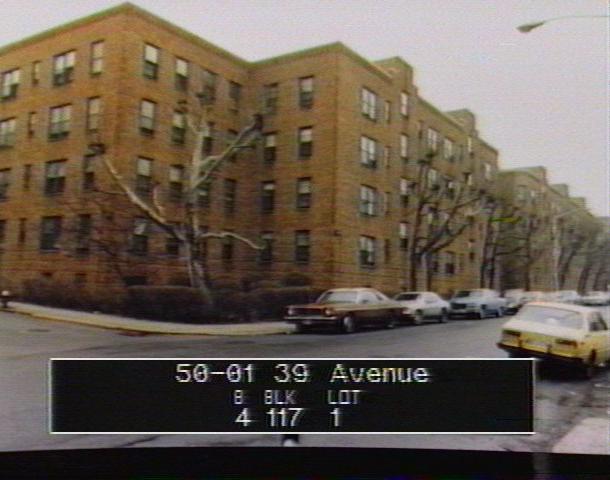
The city photographed every building for its tax records around 1940 and again in the 1980s. NYC Municipal Archives.
Written with AI from the source each entry cites, then fact-checked.
- 1931
Phipps Houses speeds its Sunnyside apartments to create work in the Depression
Announcing the Phipps Garden Apartments in January 1931, the Society of Phipps Houses, a charity for model tenements founded by steel magnate Henry Phipps, said it was hurrying construction to give people jobs during the Great Depression. It was the group's first new project since 1912, on blocks the City Housing Corporation had judged too far from the subway to pay as small houses. Phipps aimed it at white-collar clerical workers and organized it as limited-dividend housing paying investors six percent.
“Announcing the project in January 1931, Phipps Houses said it was speeding construction to provide work during the Great Depression.”
Source: Wikipedia
- 1931
Clarence Stein wraps 344 apartments around one enclosed court in patterned brick
Clarence Stein, planner of neighboring Sunnyside Gardens, designed the first group after the city closed 51st Street to create a superblock. Sixteen four-story walk-ups and six elevator buildings of six stories, all joined, enclose 344 apartments in a hollow square, grouped in T-shaped clusters so each push-button elevator served about a hundred rooms. Stein swapped Sunnyside's plain Hudson River brick for varied face brick in patterns; critic Paul Goldberger called the result a more elegant stepchild of Sunnyside, though Stein later thought he had overdone the brick.
Source: Wikipedia
- 1931
Marjorie Cautley has six full-grown elms moved into the Phipps court before it opens
Landscape architect Marjorie Sewell Cautley, who had also done the landscapes of Sunnyside Gardens and of Radburn, New Jersey, designed the great court, which Stein meant as a park for quiet enjoyment rather than a playground. With the Phipps family's approval the project paid $2,900 for six large elm trees, moved in before the buildings were done. A well drilled on the site fed the sprinklers in case city water ran short, and Cautley placed formal Dutch and English gardens at either end of the court.
“With the Phipps family's approval, the project spent $2,900 on six large elm trees, which Cautley had moved in before the buildings were finished.”
Source: Wikipedia
- 1931
Tenants fill more than 200 of the 344 new Phipps apartments within months
The first group opened in the fall of 1931, and within months more than 200 of its 344 apartments had tenants. To keep rents within reach of working people, the Society discounted two- and three-year leases, and by 1932 about ninety percent of units were on them. In 1933 it lowered rents, saying it passed falling operating costs on to tenants, and in 1951 Stein reported that the apartments had stayed nearly full for nineteen years.
“Within months of the first group's opening in the fall of 1931, more than 200 of its 344 apartments were occupied.”
Source: Wikipedia
- 1933
Planners single out the Phipps Garden Apartments for closing a street
The Regional Plan Association cited the complex in 1933, alongside Manhattan's Knickerbocker Village, as specially significant because shutting streets there had made a better site plan possible. The same year the complex was shown in The Planned Community, an exhibition staged by the housing committee of the American Institute of Architects, chaired by its architect Clarence Stein.
“In 1933 the Regional Plan Association named the Phipps Garden Apartments, along with Manhattan's Knickerbocker Village, projects of "special significance…”
Source: Wikipedia
- 1971
Phipps president Duncan Elder describes a push to admit more Black families
At the complex's 40th anniversary in 1971, rent-controlled apartments cost about $25 a room, some 2,500 names were on the waiting list and only about two percent of units changed hands each year. Duncan Elder, then president of Phipps Houses, said the company was working to raise the share of Black tenants by admitting one Black family for each white family. In the early 1980s rents for some units were still as low as $200 a month, and the wait could last seven years.
“Then-president of Phipps Houses Duncan Elder said Phipps was working to increase the share of Black tenants by admitting a Black family for every white family.”
Source: Wikipedia
Nearby
- Phipps Garden Apartments I38-20 52nd Street | 1 entry
- Phipps Garden Apartments I38-19 50th Street | 2 entries
- Phipps Garden Apartments I51-01 39th Avenue | 3 entries
- 49-17 39th Avenue1 entry
- 49-15 39th Avenue1 entry
- 51-02 39th Avenue2 entries