Margaret Sanger Clinic
17 West 16th Street | Flatiron | built 1846
Open on the map4 entries

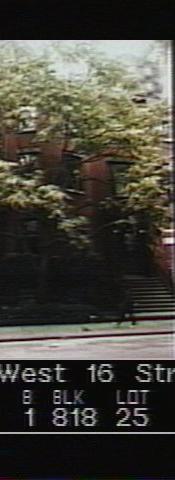
The city photographed every building for its tax records around 1940 and again in the 1980s. NYC Municipal Archives.
Written with AI from the source each entry cites, then fact-checked.
- 1846
George S. Fox builds a Greek Revival rowhouse with a rare curved bowfront
George S. Fox purchased the lot in April 1846 as part of a restricted row developed by Edward Sebring Mesier, who had inherited the land from his father-in-law John Cowman. The resulting three-story brownstone featured a curved bowfront, extremely rare among New York rowhouses, along with a cast-iron balcony at the parlor level.
Source: Daytonian in Manhattan
- 1876
Merchant William B. Rice and his wife Gertrude move into the house
Wealthy merchant William B. Rice and his wife, Gertrude Stevens Rice, acquired the West 16th Street home in 1876. Gertrude was appointed a Commissioner of Common Schools in 1888, one of the few women to hold the post at the time. After William's death in 1899, she devoted herself to charitable work from the house.
Source: Daytonian in Manhattan
- 1930
Margaret Sanger's husband buys the house for her Birth Control Clinical Research Bureau
Oil industrialist J. Noah H. Slee purchased 17 West 16th Street in 1930 as the first permanent home of his wife Margaret Sanger's Birth Control Clinical Research Bureau. The clinic served more than 10,000 patients a year and trained doctors from around the country in contraceptive techniques rarely taught in medical schools. It operated from the house until 1973.
Source: Daytonian in Manhattan
- 1993
The clinic house becomes a National Historic Landmark after a delayed designation
The National Park Service had recommended landmark status for the Sanger clinic house, but the designation stalled under the first Bush administration. After Bill Clinton took office, Interior Secretary Bruce Babbitt signed the National Historic Landmark designation on September 14, 1993, recognizing the building's role in the birth control movement.
Source: Daytonian in Manhattan
Further reading
- Margaret Sanger ClinicWikipedia
- The 1847 "Margaret Sanger Clinic" House - 17 West 16th StreetDaytonian in Manhattan
Nearby
- St. Francis Xavier Church30 West 16th Street | 4 entries
- Judge Building110 5th Avenue | 4 entries
- Adorama building45 West 17th Street | 7 entries
- 87 5th Avenue3 entries
- Corn Building91 5th Avenue | 4 entries
- 75 5th Avenue1 entry