26 Grove Street
West Village | built 1927
Open on the map6 entries

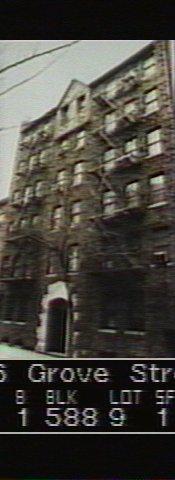
The city photographed every building for its tax records around 1940 and again in the 1980s. NYC Municipal Archives.
Written with AI from the source each entry cites, then fact-checked.
- 1914
Contractors Blake & Williams restore a c. 1815 Federal house at 26 Grove Street for their offices
An earlier building on this site was a Federal-style house of about 1815. Heating and ventilation contractors Blake & Williams saved it from the era's disdain for old houses, restored it carefully and set up their offices there. They even swapped the 1850s stoop ironwork for period railings from a nearby junk shop. Architectural Record praised the project in September 1914, but the house was demolished in 1928.
Source: Daytonian in Manhattan
- 1929
Abrahamson and Katz put up a six-story Tudor Revival apartment house with blackened clinker brick
The 26 Grove Street Corporation built the new apartment house on the cleared lot, designed by Louis Allan Abrahamson with Samuel Katz. With little money for ornament, they gave it character through clinker bricks, made dark and misshapen on purpose to look aged, and a half-timbered gable on the sixth floor. The arched doorway is framed in smooth-faced stone blocks.
Source: Daytonian in Manhattan
- 1930
Grocer Samuel N. Horowitz helps organize a grassroots fight by 9,000 grocers against chain stores
Samuel N. Horowitz, a retail grocer living here, was among the organizers of a grassroots effort that the New York Times covered on March 30, 1930 under the headline about 9,000 grocers fighting chain stores. The movement became the Associated Grocery Stores Corporation, which he headed. He collapsed and died of a heart attack at 48 on the stairs of the Stuyvesant Chess Club in February 1934.
Source: Daytonian in Manhattan
- 1943
An Irish setter named Rusty wins a medal for saving a tenant from refrigerator gas
On January 5, 1943 toxic methyl chloride leaked from Mrs. Alfred Wilcox's refrigerator in her apartment. She could not smell it, but her Irish setter, Rusty, did and pestered her until she responded. On September 21 the Greenwich Village Humane League presented the dog with a medal of heroism.
Source: Daytonian in Manhattan
- 1947
A resident serves on the jury in the Giants bribery trial and is sequestered at a hotel
William H. Unger, an electrical and radio engineer, was picked for the jury in the case of Alvin J. Paris, who was charged with offering bribes to two New York Football Giants players before the December 1946 championship game against the Chicago Bears. The case involved gambling and gangland ties, and death threats came even before jurors were chosen. The jurors were confined to a hotel for the trial.
Source: Daytonian in Manhattan
- 1980
The building stands in for John Ritter's character's apartment in the film Hero at Large
Daytonian in Manhattan notes that the building appeared on screen in the 1980 comedy Hero at Large, as the apartment of the character Steve Nichols, played by John Ritter.
Source: Daytonian in Manhattan
Further reading
- Tudor in the Village - 26 Grove Street Daytonian in Manhattan
- Then & Now photos: 26 Grove StreetVillage Preservation: Greenwich Village Then & Now
Nearby
- 22 Grove Street5 entries
- The Friends building90 Bedford Street | 5 entries
- 88 Bedford Street5 entries
- Chumley's86 Bedford Street | 13 entries
- 54 Barrow Street1 entry
- 52 Barrow Street1 entry