Neighborhood Playhouse (Abrons Arts Center)
466 Grand Street | Lower East Side | built 1915
Open on the map5 entries

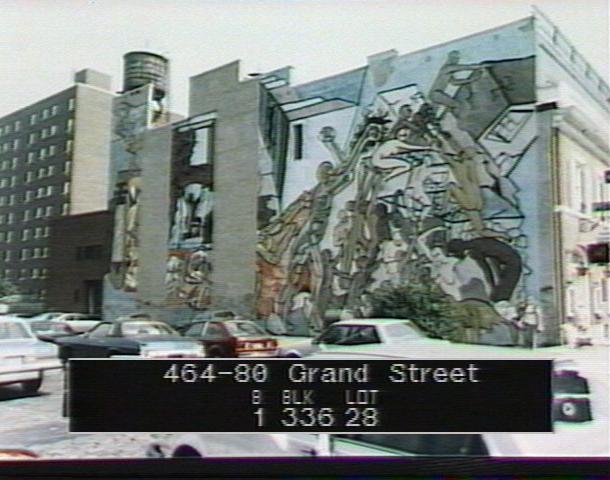
The city photographed every building for its tax records around 1940 and again in the 1980s. NYC Municipal Archives.
Written with AI from the source each entry cites, then fact-checked.
- 1914
Ingalls and Hoffman design a domed neo-Georgian playhouse
Architects Harry Creighton Ingalls and E. F. Burrall Hoffman Jr. designed the 300-seat theater in neo-Georgian style, light red brick trimmed with marble. A quarter-dome behind the stage let designers project realistic sky effects, a feature that impressed visiting Harvard drama professor George P. Baker. Construction, funded entirely by sisters Alice and Irene Lewisohn, began in April 1914 and cost $60,000.
Source: Daytonian in Manhattan
- 1915
Alice and Irene Lewisohn open the Neighborhood Playhouse
Sisters Alice and Irene Lewisohn built this $60,000 theater at 466 Grand Street, designed by Harry Creighton Ingalls and F. Burrall Hoffman Jr., and opened it on February 12, 1915, with Jephthah's Daughter, written for the occasion. Tickets cost as little as 5 cents on weeknights, and the sisters covered the yearly deficits. It staged the first American productions of several Lord Dunsany plays.
Source: Daytonian in Manhattan
- 1917
Police arrest the Playhouse treasurer over Sunday performances
Treasurer Bessie Kaplan was arrested in January 1917 for violating Sabbath laws by staging performances on Sundays. A magistrate ruled in March 1917 that the shows could continue, affirming the young theater's right to keep its weekend program running for its Lower East Side audience.
Source: Daytonian in Manhattan
- 1925
The Neighborhood Playhouse stages a celebrated production of The Dybbuk
In 1925 the Playhouse staged S. Ansky's Yiddish drama The Dybbuk, directed by co-founder Alice Lewisohn Crowley. The New York Times called it the high point of the theater's acting and production, crowds were turned away night after night, and larger theaters tried without success to move it uptown.
Source: jewishstudiescolumbia.com
- 1948
Alwin Nikolais makes the playhouse home to his dance company
After the Lewisohns stopped presenting plays in 1927 and turned to their Neighborhood Playhouse School of the Theatre, the theater found new uses. From 1948 to 1970 it was home to the Alwin Nikolais Dance Company, and it later hosted the New Federal Theatre before becoming the Abrons Arts Center, the settlement's performing arts program.
Source: Daytonian in Manhattan
Further reading
- The Neighborhood Playhouse -- 466 Grand StreetDaytonian in Manhattan
Nearby
- Bialystoker Synagogue7 Bialystoker Place | 10 entries
- Toynbee House311 East Broadway | 3 entries
- Isaac T. Ludlam House281 East Broadway | 5 entries
- 511 Grand Street House511 Grand Street | 4 entries
- Henry Street Settlement265 Henry Street | 4 entries
- St. Mary's Church440 Grand Street | 5 entries