Adriance Farmhouse, Queens County Farm Museum
73-50 Little Neck Parkway | Bellerose | built 1772
Open on the map7 entries

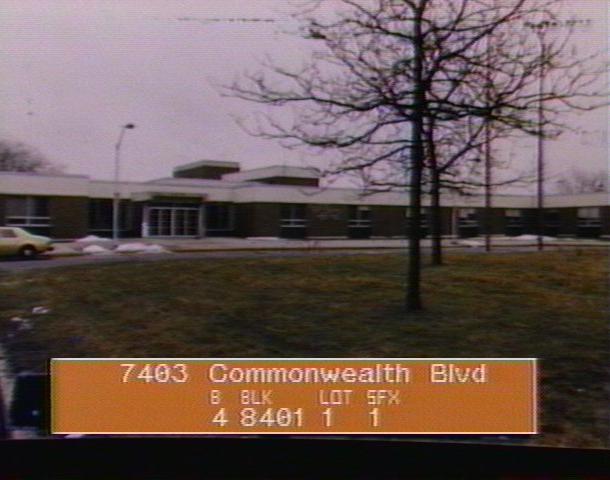
The city photographed every building for its tax records around 1940 and again in the 1980s. NYC Municipal Archives.
Written with AI from the source each entry cites, then fact-checked.
- 1697
The Adriance family begins more than a century of farming this land
The Queens County Farm Museum's 47 acres are the largest surviving piece of undisturbed farmland in the city, worked continuously since 1697. A Dutch family, the Adriances, owned the farm from 1697 until 1808, and the restored farmhouse is known today as the Adriance Farmhouse.
Source: Wikipedia
- 1750
Builders frame the farmhouse in the Dutch manner with clay-and-straw insulation
The oldest part of the house, dated by its physical evidence to about the mid-18th century, mixes Dutch colonial and New England traits. Closely spaced oak bents with tulip poplar beams form the frame, and clay bound with straw fills the walls between the studs. A spring eave, shingles held by hand-wrought nails and twelve-over-twelve windows survive on the north wall, and the house sits on fieldstone laid with mud joints.
“The exterior walls have "wattle and daub" nogging consisting of clay with a straw binder set between the studs as insulation.”
- 1796
Samuel Cornell dies, leaving his daughter Elizabeth the land and house where she lives
Mid-18th-century records show the land belonged to Samuel Cornell, a great-grandson of Richard Cornell, who settled in Flushing around 1655. When Cornell died in 1796, his will gave his daughter Elizabeth the part of his land where she was living, with its house. Elizabeth had married Edward Hicks in 1758, and physical evidence dates the house to about then, so the Landmarks Commission judged this was likely the farmhouse.
“…to his daughter Elizabeth he leaves "that part of my lands where she now lives with the house…”
- 1812
Flatlands couple John Bennum and Johanna Stoothoff own the farm
John Bennum (or Benham) and his wife Johanna Stoothoff moved here from Flatlands, Brooklyn, sometime between 1802 and 1808 and acquired the property from the heirs of Samuel Cornell; an 1812 mortgage shows they owned it by then. Later owners in the 19th century were Daniel and Jane Lent, followed by Peter Cocx, and most of the house's additions date from Cocx's time.
“An 1$12 mortgage on the property shows that Bennum owned it by that time.”
- 1900
Under Daniel Stattel the farm ranks among the most valuable in Queens County
Through the 19th century the colonial homestead turned into a truck farm growing produce for market. By 1900 Daniel Stattel, the last private owner to farm it, had made it the second largest farm in Queens County and the most valuable, assessed at $32,000.
Source: Wikipedia
- 1926
Creedmoor State Hospital buys the farm and puts its patients to work in the fields
The Stattel family sold out in 1926 to Pauline Reisman, a real estate investor, who passed it on within the year to Creedmoor State Hospital. The hospital used it for occupational therapy, to supply its kitchen with food, and to raise ornamental plants for the rest of its campus.
“In 1926, the Stattels sold the farm to real estate investor Pauline Reisman, who, in turn, later that year sold it to Creedmoor State Hospital…”
Source: Wikipedia
- 1975
Neighbors discover the farmhouse is colonial and form a society to restore it
After New York State declared the Creedmoor farm surplus, residents pushed to keep it as open space. In 1975 it came to light that the farmhouse dated from the 1700s, and neighbors organized the Colonial Farmhouse Restoration Society of Bellerose to care for it. In February 1976 the group got a permit to occupy the house, restore it and run educational programs on the farm.
“In 1975 it was discovered that the house on the farm dated back to the 18th century, and the Colonial Farmhouse Restoration Society of Bellerose was formed…”
Further reading
- Cornell FarmhouseWikipedia
Nearby
- Queens High School of Teaching, Liberal Arts and the Sciences74-20 Commonwealth Boulevard | 3 entries
- Cathedral Seminary House of Formation72-45 Douglaston Parkway | 2 entries
- Cohen Children's Medical Center269-01 76th Avenue | 4 entries