Old St. James Church
86-02 Broadway | also 85-08 51st Avenue | Elmhurst | built 1706
Open on the map7 entries

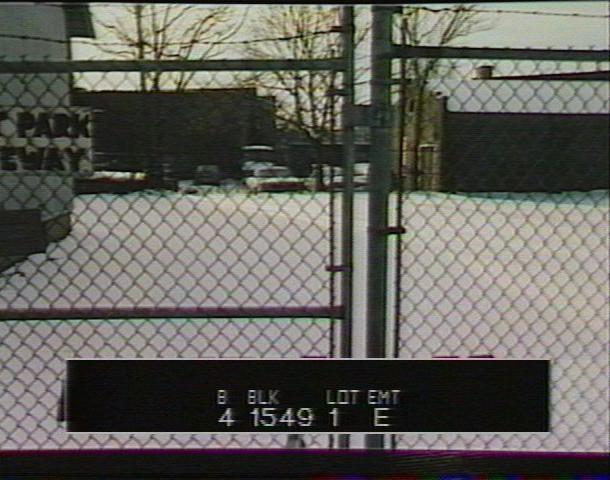
The city photographed every building for its tax records around 1940 and again in the 1980s. NYC Municipal Archives.
Written with AI from the source each entry cites, then fact-checked.
- 1736
Builder Joseph Moore and carpenter James Renne Jr. complete Newtown's Anglican mission church
Newtown granted the Church of England mission a deed of land on April 19, 1733, and once money was raised, work ran from early 1735 to 1736. The plain, box-like church had wood shingles, round-arched windows and a west tower with a steeple and weather vane. Leading families sat in locked box pews near the minister, while slaves, indentured servants, apprentices and Native Americans were seated up in the tower.
“…records name Joseph Moore as the builder and James Renne Jr. as the carpenter. The pews were added in 1740.”
Source: Wikipedia
- 1761
With rector Samuel Seabury's backing, the congregation wins its own parish charter
Samuel Seabury Jr. ministered to Jamaica, Flushing and Newtown from 1757 to 1766. In 1761, with his support, Newtown's congregation asked the provincial governor for the right to choose its own clergyman and received a charter as the Church of England Parish of Saint James, along with a quarter acre for a cemetery. Seabury later became America's first consecrated bishop, in 1784.
“In 1761 during his ministry and with his support, the Newtown congregation petitioned the provincial governor for the right to appoint their own clergyman…”
- 1848
The congregation holds its last service here and moves to a new church up Broadway
On July 16, 1848 the parish worshipped in the old building for the final time before moving to a wooden Gothic Revival church at 84-07 Broadway. Most of the bodies in the old graveyard were dug up and reburied at the new church in 1851. The old church became a parish hall, and in 1861 its pulpit came out when it was turned into a Sunday school.
Source: Wikipedia
- 1883
The steeple comes down and a rear annex and Gothic front remake the old church
In 1882 the last graves were moved and old grave markers taken away. Between 1882 and 1883 the tower's steeple was removed and a rear annex built where the tower had stood, and the front was redone in the Gothic Revival style. Inside, benches replaced the pews, the old paneling was reused as wainscoting, and every window was replaced.
“…between 1882 and 1883, the steeple of the old tower was taken down, and the rear annex was built on the site of the tower.”
Source: Wikipedia
- 1963
The vestry turns down a Postal Service offer to tear the church down for a post office
The old church served Boy Scouts of the St. James Troop from 1928 to 1953, and Scouts, Girl Scouts and Brownies used it into the 1980s. In the 1950s the vestry refused a federal request to use it for civilian defense, and in 1963 it rejected a United States Postal Service offer to demolish the building for a post office.
“…as well as an offer by the United States Postal Service to demolish the church for a post office in 1963.”
Source: Wikipedia
- 2004
A $400,000 restoration returns the church to its old look for the parish's 300th year
In the late 20th century the decaying building housed Alcoholics Anonymous, Vietnam Veterans of America, a Chinese senior citizens' group and the Indonesian Bethel Gospel Church. Father William Galer and architect Kaitsen Woo raised $400,000 to bring it back to its original condition, following plans Woo drew up. The work was finished in 2004, three centuries after the parish began, and the building is now used sparingly as a community center.
Source: Wikipedia
- 2017
After an earlier refusal, the city landmarks the church as its second-oldest standing
Listed on the National Register in 1999, the church was first turned down by the Landmarks Preservation Commission, which said the 1883 remodeling and 20th-century siding left little historic exterior. With the Episcopal Diocese of Long Island in support, the commission reconsidered and designated it in September 2017, calling it the city's second-oldest standing church after Flushing's Old Quaker Meeting House.
Source: Wikipedia
Further reading
- St. James Church (Queens)Wikipedia
Nearby
- Reformed Church of Newtown85-15 Broadway | 7 entries
- St. James Episcopal Church84-07 Broadway | 1 entry
- Indo Java Groceries (Warung Selasa)85-14 Queens Boulevard | 2 entries
- Elks Lodge 87882-10 Queens Boulevard | 8 entries
- Newtown High School48-01 90th Street | 9 entries
- Queens Place Mall88-01 Queens Boulevard | 3 entries