Hendrick I. Lott House
1940 East 36th Street | Marine Park | built 1899
Open on the map6 entries

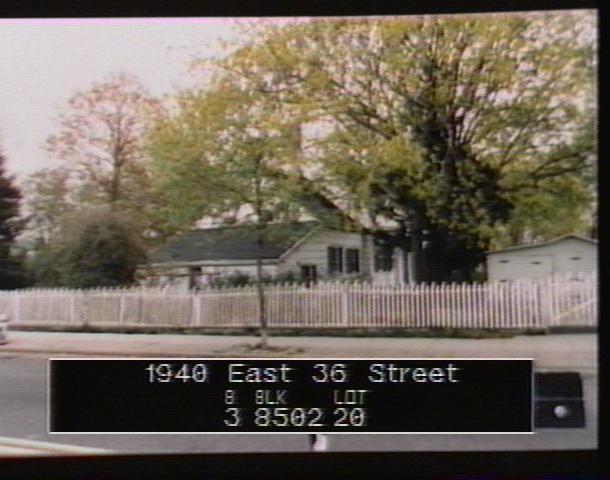
The city photographed every building for its tax records around 1940 and again in the 1980s. NYC Municipal Archives.
Written with AI from the source each entry cites, then fact-checked.
- 1720
Johannes Lott buys a Flatlands farm and builds the first Lott house, whose east wing survives
Johannes Lott bought a farm in southern Flatlands from Coert Voorhies in December 1719 for 2,100 pounds. In 1720 he built a house there with his wife, Antje Folkersen. He later bought more land until his holdings reached Jamaica Bay, and he sat in the New York colonial assembly from 1727 to 1747. The east wing of today's house is a section of this 1720 building, which his grandson Hendrick later reused.
“In 1720 he and his wife Antje Folkersen built a house on this land.”
- 1776
British troops camp on the Lott farm before the Battle of Brooklyn
When British troops landed in Brooklyn on August 22, 1776, they spread through southern Brooklyn and set up camps, one of them on the Lott House property. Archaeologist Alyssa Loorya says the army then marched through the lightly guarded Jamaica Pass, a surprise that led to the Continental Army's defeat in the Battle of Brooklyn on August 27.
Source: brooklynpaper.com
- 1800
Hendrick I. Lott builds a symmetrical Dutch Colonial house and attaches his grandfather's old kitchen
Eight years after marrying Mary Brownjohn, Hendrick I. Lott built a new house that mixed the Dutch Colonial form with details from the fashionable Federal style. He moved the kitchen from his grandfather's 1720 house and attached it to the east end of the new building, with a similar west wing on the other side. Gardens, barns and other outbuildings stood around the house on a working farm.
“He removed the kitchen from his grandfather's house of 1720 and attached it to the eastern end of the new house…”
- 1805
The Lott family frees its enslaved workers by 1805 and hires them back as workers
Like most Brooklyn farmers of the time, the Lotts used enslaved labor on their farm. According to Brownstoner, they freed their slaves in 1805 and then took them back on as workers. Historians surmise from a hidden closet and other signs of Underground Railroad activity found in the house that the family were ardent abolitionists.
Source: brownstoner.com
- 1923
Jennie Lott Suydam buys the Lott homestead after her brother's death and lives there until 1952
When John B. Lott died in 1923, his sister Jennie Lott Suydam bought the family house from his estate for $2,366. The three-quarter-acre plot she received was all that remained of the original Lott holdings, since the rest of the farm was sold for residential development. She lived in the house until her death in 1952, and two of her daughters stayed on until their deaths in the 1980s.
- 1989
The Landmarks Preservation Commission designates the Hendrick I. Lott House
The Landmarks Preservation Commission designated the house a city landmark in 1989, calling it a rare surviving Dutch Colonial house in Brooklyn and one of the finest. Apart from parts of the Wyckoff House, it holds the earliest surviving eighteenth-century fabric of any Dutch Colonial house in the borough. The report also stressed that it still stands on its original site, with enough surrounding land to give a sense of its setting.
“…retaining its original orientation on its original site with sufficient surrounding property to give some sense of its original setting…”
Further reading
- Hendrick I. Lott HouseWikipedia
Nearby
- Kings Plaza Shopping Center5141 Avenue U | 10 entries
- Stoothoff-Baxter-Kouwenhoven House1640 East 48th Street | 7 entries
- Elias Hubbard Ryder House1926 East 28th Street | 4 entries
- Maimonides Midwood Community Hospital2525 Kings Highway | 5 entries
- Wyckoff-Bennett Homestead1669 East 22nd Street | 6 entries
- St. Edmund Preparatory High School2474 Ocean Avenue | 4 entries