826 Manida Street
Hunts Point | built 1909
Open on the map3 entries

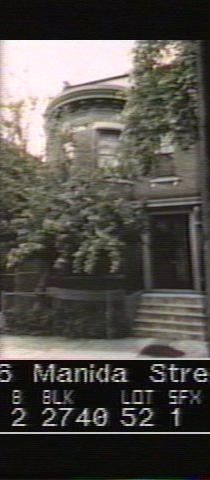
The city photographed every building for its tax records around 1940 and again in the 1980s. NYC Municipal Archives.
Written with AI from the source each entry cites, then fact-checked.
- 1908
Daube & Kreymborg design 826 Manida Street as one of 24 east-side two-family houses
Read more
Built in 1908 and 1909 under permit NB 885-1908, this two-story brick and limestone house was drawn by Daube & Kreymborg for James F. Meehan's Manida Development Company. It is one of 24 semi-detached houses lining the block's east side, from 814 to 870 Manida Street. No. 826 shares a party wall with No. 822, and the pair still have their glass-and-metal double doors.
“Nos. 826 and 822 Manida Street share a party wall.”
- 1950
Jazz bandleader Buddy Johnson buys 826 Manida Street, which his family still owns
Buddy Johnson (1915-1977), the jazz bandleader who wrote hits including "Since I Fell for You," bought this house in 1950. The purchase came during a period when many Black and Puerto Rican New Yorkers were leaving Harlem and East Harlem for South Bronx neighborhoods such as Hunts Point and Longwood in search of better housing. When the Landmarks Preservation Commission wrote its 2020 designation report, the Johnson family still owned the house.
- 1951
Woody Johnson's family moves into 826 Manida Street, the only African American family on the block
In a 2005 interview for Fordham University's Bronx African American History Project, Woody Johnson recalled that his family moved into a private house at 826 Manida Street in 1951. The street was then mostly Jewish, and his was the only African American family on the block. His father was a piano player who led a band at the Hunts Point Palace. Another interviewee recalled the street becoming more African American, Puerto Rican and Dominican as Jewish residents moved out.
Source: research.library.fordham.edu
Nearby
- 828 Manida Street2 entries
- 822 Manida Street1 entry
- 820 Manida Street2 entries
- 830 Manida Street2 entries
- 832 Manida Street2 entries
- 818 Manida Street2 entries